Blog · Conversion · 2025-06-26 · By vanderbis Editorial Team
Landing Pages for Cross-Border Demand
Cross-border landing pages need more context, stronger proof translation, and fewer assumptions than domestic pages.
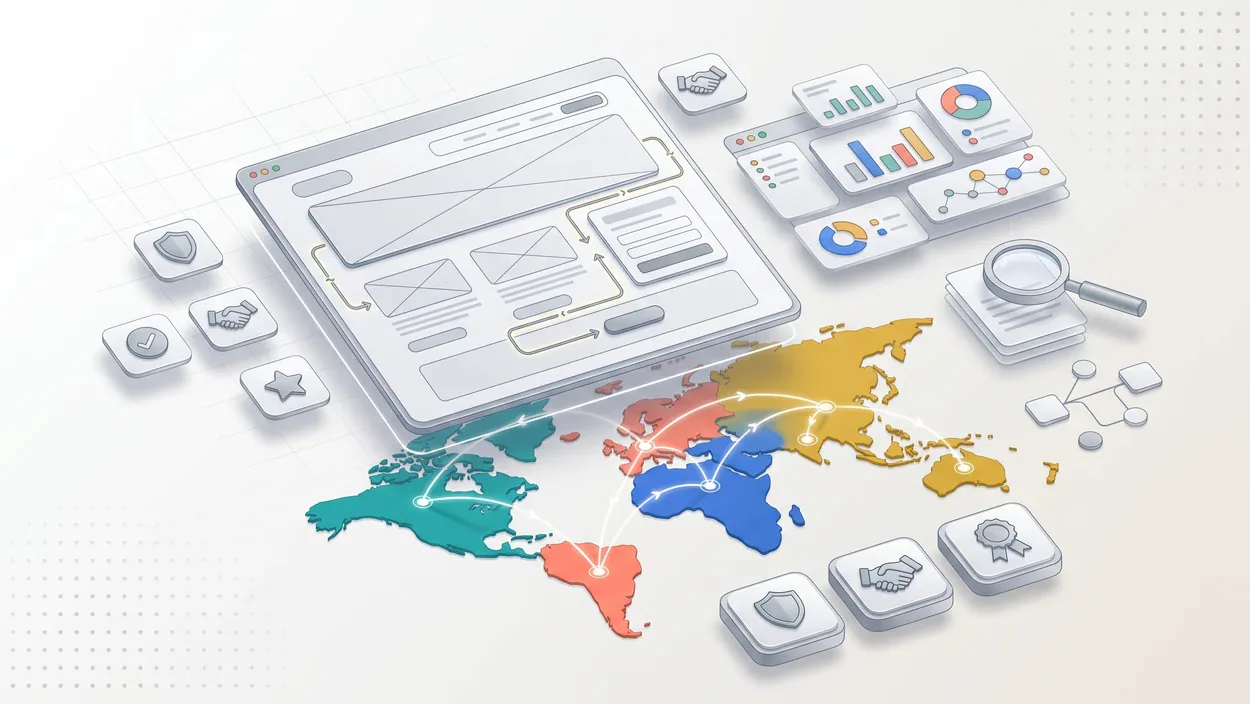
A landing page for a familiar domestic audience can rely on shorthand. A cross-border landing page cannot. It must assume the buyer needs more context before they can trust the offer.
The page should explain the problem, the category, the service model, the buyer fit, and the next step in a logical order. Visual polish helps, but clarity does more of the conversion work.
Proof must be translated carefully. If a claim depends on domestic context, the page should explain why it matters. If the company lacks public case studies, the page should avoid fake examples and instead show method, process, and principles.
The best cross-border pages also reduce operational uncertainty. Buyers want to know how communication works, what inputs are needed, and what a first engagement looks like.
When a page answers those questions well, it feels more professional because it respects the buyer's uncertainty.
Author
vanderbis Editorial Team
Overseas marketing systems, content strategy, paid media, SEO, and GEO research
Articles are written and reviewed by the vanderbis editorial team based on client-facing strategy work, campaign reviews, search behavior, platform policy awareness, and cross-border marketing research. We avoid invented client results, guaranteed rankings, and unsupported performance claims.
Editorial standards
How we keep articles useful and credible.
- We separate practical recommendations from guarantees and call out external dependencies such as platform rules, search systems, ad auctions, and market conditions.
- We favor examples, operating steps, and buyer questions over vague trend commentary.
- We review articles for truthful claims, clear service boundaries, and usefulness to teams entering North America, Europe, and Southeast Asia.
How to apply this idea
- Make the landing page explain problem, audience fit, offer, proof, process, and next step in a clear order.
- Remove assumptions that only domestic buyers would understand.
- Match the ad promise, page headline, and contact form so the buyer does not feel a break in logic.
- Use form questions to qualify demand without making the first step feel heavy.
What to avoid
Do not rely on visual polish alone. A beautiful landing page still fails if buyers cannot understand the offer or trust the claim.
Related service